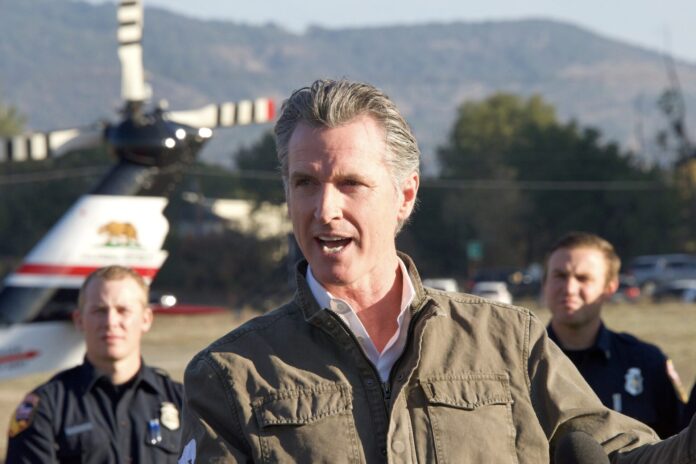
Over the last several months – or is it several years? – California Governor Gavin Newsom has obviously been priming himself for a potential presidency.
From his grandstanding against Trump to his curious interviews with conservative podcasters, Newsom has steadily edged himself more towards the center.
The governor has also steadily insisted upon California’s indisputable value to the nation, especially in terms of technological advancement.
In an interesting press release, Newsom proclaimed that the wildfire-ravaged state is becoming golden, yet again.
“California is the global hub for generative artificial intelligence (GenAI) – we are the natural leader in this emerging field of technology – tools that could very well change the world. To capture its benefits for the good of society, but also to protect against its potential harms, Governor Newsom issued an executive order today laying out how California’s measured approach will focus on shaping the future of ethical, transparent, and trustworthy AI, while remaining the world’s AI leader,” Newsom’s office asserted.
Right.
And part of that “trustworthy” AI rather predictably relates directly to elections.
Which Newsom soon addressed. Unfortunately, Newsom addressed the challenges with AI in a manner that was a tad too heavy handed for tech titan Elon Musk, chiefly by attempting to ban the use of deepfakes in virtually any political content, as detailed in another interesting press release.
“Safeguarding the integrity of elections is essential to democracy, and it’s critical that we ensure AI is not deployed to undermine the public’s trust through disinformation – especially in today’s fraught political climate. These measures will help to combat the harmful use of deepfakes in political ads and other content, one of several areas in which the state is being proactive to foster transparent and trustworthy AI,” Newsom asserted.
Yes. Except when the state has become a bit too proactive.
Indeed, what inspired the flurry of Newsom’s anti-deepfake laws was the unflattering video of then-presidential candidate Kamala Harris.
“Reactions to the deepfake of Harris have been divided, with some saying it’s an example of a dangerous type of manipulated media that needs tight regulation, and others saying it’s a clear example of parody and thus deserves a different type of treatment,” NBC News detailed.
Apparently, parody was on the mind of Judge John Mendez, who ruled in favor of Musk.
According to an intriguing report from Politico, Newsom had long been “vowing to take action after the tech billionaire and then-Donald Trump supporter shared a doctored video of former Vice President Kamala Harris ahead of the election.”
However, Judge Mendez made it clear that Newsom’s laws went a tad too far … they veered straight into the censorship zone.
“It’s become a censorship law and there is no way that is going to survive,” Mendez flatly remarked.
Especially when the opponent – Elon Musk – is a “free speech absolutist.”
“I think the statute just fails miserably in accomplishing what it would like to do,” Mendez
Bluntly, albeit brutally, put.
And with that, Mendez swiftly slapped down Newsom’s efforts to monitor deepfake content.
Nonetheless, Newsom spokesperson Tara Gallegos has made it very clear that individuals within the governor’s office “remain convinced that commonsense labeling requirements for deep fakes are important to maintain the integrity of our elections.”
Well, the state will need to do something different in order for Mendez to be “convinced.”
In the meantime, Musk is targeting other states that passing laws that might appear overly heavy handed with deepfakes.
As detailed by Reuters, Musk suing Minnesota over similar concerns regarding freedom of expression.
“This system will inevitably result in the censorship of wide swaths of valuable political speech and commentary,” Musk mused.
Interesting approach. And it is the same approach that Musk has adopted in his apparent lawsuit against Minnesota.
“Elon Musk’s social media platform X sued Minnesota on Wednesday over a state law that bans people from using AI-generated ‘deepfakes’ to influence an election, which the company said violated protections of free speech. The law replaces social media platforms’ judgment about the content with the judgment of the state and threatens criminal liability if the platforms get it wrong, according to the lawsuit that was filed in Minnesota federal court,” Reuters detailed.
Something suggests that Minnesota will probably go the way of California.
Musk is likely quite happy now. After all, it’s not his first victory rodeo.
Last year, Musk also bested Newsom in another battle over free speech, with Judge Mendez once again favoring the arguments put forth by the legal counsel of the tech mogul.
Which means that the latest victory has to be especially grating for Newsom.
What will he do next?
Time remains to tell, but one thing is quite clear: Newsom has been judicially walloped by Musk for a year.
Author: Jane Jones