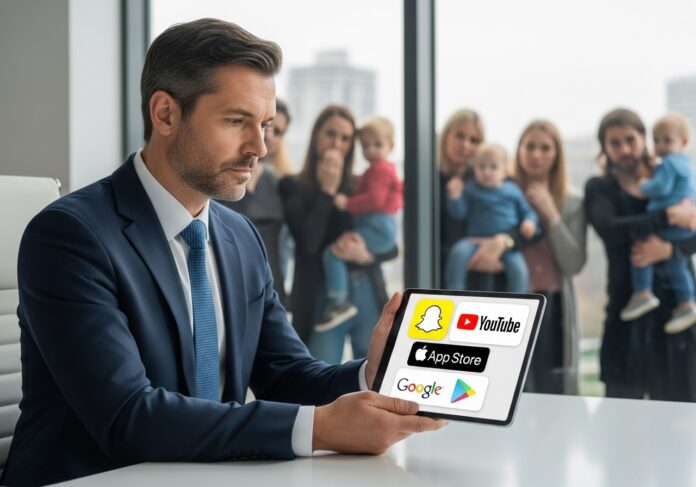
The European Union has launched a new investigation into how some of the world’s biggest technology companies are protecting children online. The EU wants to know if apps like Snapchat and YouTube, along with the Apple App Store and Google Play Store, are doing enough to keep young people safe from harmful content.
At first glance, this might seem like a good idea. After all, who doesn’t want to protect kids? But when you look closer, there’s a bigger issue at play—one that raises questions about government overreach, personal responsibility, and freedom.
The EU is demanding that these companies explain how they stop minors from accessing content that could be considered dangerous. This includes things like vape products, drugs, or videos that promote things like eating disorders. They’re also asking how age verification works and whether children under 13 are using apps they’re not supposed to.
Now, we should all agree that children need guidance and protection. But is it the job of a central government body in Brussels to dictate how every tech company must run its platform? Or is that responsibility better handled by parents, families, and local communities?
In America, we have a different way of thinking about things. Our Constitution was built on the idea that power should be limited and spread out. That’s why we have states’ rights, local government, and checks and balances. When we hand too much power to one central authority—especially in a far-off capital—we risk losing the freedoms that make our nation strong.
The European model is one of top-down control. They passed a law called the Digital Services Act in 2023, and it gives them sweeping power over internet companies. In 2024, they expanded this law even more. Now, they’re using it to go after tech platforms that operate across Europe. They’re not just asking questions—they’re making demands.
For example, the EU wants platforms to use age verification tools that could collect personal data on millions of users. That might help block harmful content, but it also opens the door to privacy concerns and censorship. Once a government starts deciding what content is “harmful,” it’s a short step to banning opinions, ideas, or speech that don’t fit the official narrative.
In the United States, we have the First Amendment, which protects freedom of speech. That means the government can’t just shut down content it doesn’t like. It also means we trust individuals—especially parents—to make choices for themselves and their families.
Snapchat and YouTube say they’re already using tools to moderate content. They use things like PhotoDNA to detect harmful images and filters to block abusive language. They also say they’re working with the EU to provide the information requested. That’s fine. Companies should be transparent. But should they be forced to follow one-size-fits-all rules written by unelected bureaucrats?
Let’s not forget that Apple and Google are being asked about apps that let minors access gambling or create inappropriate content. Again, these are serious issues, but parents already have tools to block certain apps, set limits, and monitor their children’s devices. Those tools should be improved, but the solution isn’t more government control—it’s more personal responsibility.
The EU’s push may be well-meaning, but it shows what happens when power is concentrated in the hands of a few. In America, we must continue to defend our system of freedom, even when the issue is as emotional as child safety. We can protect our kids without giving up our rights. That’s what our Founders believed, and it’s still true today.
In the end, the best defense for children is a strong family, a local community that cares, and a government that knows its limits. Let’s not follow Europe’s path of control and surveillance. Let’s stay true to the American way—one where liberty and responsibility go hand in hand.