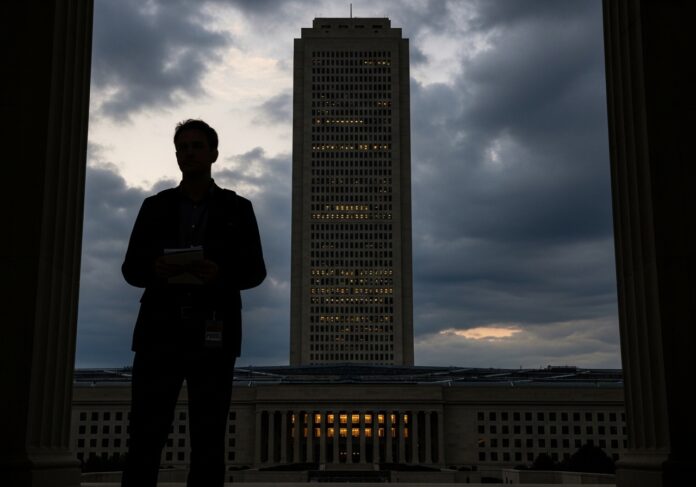
In a quiet but important move, fifteen journalists from major news outlets have signed a new press policy with the United States Department of War, also known as the Pentagon. This policy is meant to guide how news reporters cover sensitive military operations. On the surface, it might seem like a smart way to protect our troops and keep secrets out of enemy hands. But when we look closer, we must ask a serious question: Are we sacrificing press freedom in the name of security?
The Constitution does not give the government power to control the press. In fact, the First Amendment clearly says, “Congress shall make no law… abridging the freedom of speech, or of the press.” Our Founders made this a top priority because they knew free speech and a free press are the watchdogs of liberty. If the government controls the message, the people become blind to what that government is doing.
The Pentagon’s new policy claims to balance national security with the public’s right to know. But here’s the catch: journalists only get access to certain briefings and information if they agree to follow the Pentagon’s rules. In other words, they must play by the government’s terms if they want to do their job. That is a dangerous trade. It creates a system where journalists may become more loyal to government officials than to the truth.
Let’s be clear: protecting our troops and keeping battle plans secret is a real and serious job. No one wants a reporter giving away the location of our soldiers or leaking classified strategies. But that doesn’t mean the government should handpick which facts the public is allowed to hear. When rules are written by the same people being reported on, you end up with soft questions, friendly coverage, and less accountability.
This policy also comes at a time when Americans are already skeptical of the media. For years, big news outlets have been accused of pushing government narratives instead of challenging them. Under this new agreement, that problem may only get worse. If the Pentagon rewards journalists who follow the rules with “unique access” and punishes those who ask tough questions by cutting them off, what kind of reporting will we get? Not the kind that uncovers corruption or holds the powerful in check.
Some defenders of the policy say it still allows for transparency and cooperation. But history warns us that government promises of openness often come with strings attached. During times of war or national crisis, many governments have tried to silence the press “for the good of the country.” Those efforts often lead to censorship and cover-ups.
We must also ask why only certain journalists were invited to sign this policy. Were they chosen because of their loyalty? Their political views? Their willingness to go along to get along? If the government is only working with friendly reporters, then the public only hears one side of the story.
President Trump has long called out the dangers of fake news and media bias. He understands that a strong country depends on strong truth-telling. That means defending both national security and the right of the people to know what their government is doing. These goals are not enemies—they can work together. But only if we guard our freedoms and hold our leaders accountable.
In the end, this new Pentagon press policy is more than just a set of rules. It is a test of whether we still believe in the principles of the Constitution. A free press must be free to ask hard questions, dig for real answers, and speak truth to power—even when that power wears a uniform. If we give up that freedom in exchange for access, we risk losing the very liberty our soldiers fight to protect.