
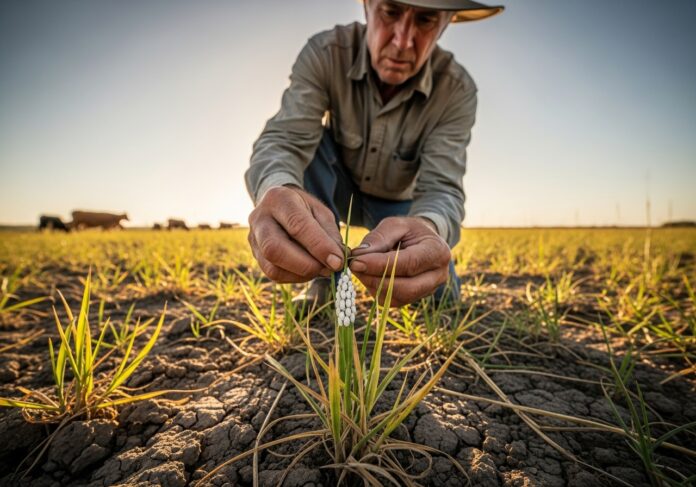
Texas is under attack—not by a foreign army, but by a small, dangerous insect called the pasture mealybug. This pest, *Helicococcus summervillei*, is new to North America and is spreading fast across the state. Already, it has been found in more than 20 counties, and the damage is growing. If we do not act quickly and wisely, this tiny bug could cost Texas ranchers and farmers millions of dollars in lost hay and weakened grazing lands.
Commissioner Sid Miller sounded the alarm this week, saying, “Texas is once again on the front lines.” He’s right. This isn’t just a bug problem. It’s a threat to our way of life, our economy, and our food supply. The pasture mealybug is already known in Australia, where it destroyed millions of acres of pasture. Now it’s here, and Texas must act with urgency and resolve.
Our Constitution leaves agriculture largely in the hands of the states, as it should. Texas does not need heavy-handed federal interference. What we need is strong leadership from the state, cooperation with local landowners, and clear, science-based strategies. Thankfully, the Texas Department of Agriculture is working with Texas A&M AgriLife Extension and the U.S. Department of Agriculture’s Animal and Plant Health Inspection Service. This is the kind of federal partnership the Constitution allows—limited, supportive, and focused on protecting states’ rights and local industries.
But let’s be clear: the real defense starts with the people of Texas. Ranchers, hay producers, and landowners are the eyes and ears on the ground. They know when something is wrong with their grass. The pasture mealybug hides low in the plants and under debris, making it hard to see early on. But signs like yellowing, purpling, stunted growth, and dying grass patches mean trouble. If you see small white fuzzy clusters on your plants, it’s time to act.
This pest feeds on Bermudagrass, Bahia grass, Johnsongrass, haygrazer, St. Augustine, bluestem, and other important grasses common in Texas. These are the grasses that feed our cattle and produce the hay that keeps our livestock alive. Without them, we face rising costs and lower food supply. That hurts everyone—from the rancher to the grocery shopper.
As of now, there are no insecticides in the United States approved to stop this pest. That’s a problem. The federal government must move fast to approve safe and effective treatments. But it must do so without burying farmers in red tape. President Trump has always stood for cutting bureaucracy and putting America’s workers and producers first. In times like these, we need that kind of leadership more than ever.
We also need clear reporting. Anyone who suspects they have an infestation should call the Texas Department of Agriculture at 1-800-TELL-TDA. The more we know, the better we can stop the spread before it reaches all corners of the state.
Let’s remember, Texas agriculture is not just local—it feeds the nation. And when Texas ranchers thrive, America thrives. We must treat this pest not just as a nuisance but as a serious economic and environmental threat. With early action, strong local leadership, and constitutional cooperation between states and limited federal experts, we can protect our land and our liberty.
The pasture mealybug may be new to Texas, but Texans are not new to hardship. We’ve faced droughts, floods, and storms, and we’ve always come back stronger. Now is the time to stand together, stay alert, and fight back with the tools our Constitution gives us—state control, individual responsibility, and local knowledge.
This is more than a bug problem. It’s a test of our resolve. And Texans are ready.